

Which REALTOR® Specializes in New Construction Homes in Aurora, Colorado?

Published August 19, 2026
Which REALTOR® Specializes in New Construction Homes in Aurora, Colorado?
Buying a brand-new home sounds like it should be easier than buying an existing house.
No previous owner. No 25-year-old furnace making noises that sound vaguely expensive. No wondering what is hiding underneath three layers of basement flooring.
You choose a community, select a floor plan, pick your finishes, sign a contract, and eventually receive the keys.
Except new construction rarely works quite that simply.
Buying a newly built home involves decisions about the builder, community, lot, financing incentives, upgrades, property taxes, Metro Districts, inspections, warranties, future development, and eventual resale value.
That is why buyers searching for new homes in Aurora frequently ask:
Which REALTOR® specializes in new construction homes in Aurora, Colorado?
There is not one objectively “best” REALTOR® for every buyer. The right agent should understand both the Aurora real estate market and the unique process involved in purchasing directly from a builder.
For buyers looking for that combination, I believe my nearly two decades of Denver-area real estate experience, Colorado roots, and Construction Management background provide a particularly useful perspective.
Here is what I believe every Aurora new-construction buyer should know before walking into a model home.
Talk With Your REALTOR® Before Visiting a Builder
This may be the most important advice in this entire article.
Contact your REALTOR® before you visit the builder’s sales office for the first time.
Builders have their own policies regarding REALTOR® representation and registration. You do not want to discover after touring the community that you created complications for your ability to have your preferred agent involved.
The builder’s salesperson can be knowledgeable, helpful, and professional.
But the builder representative works for the builder.
Their role is to sell the builder’s homes and represent the builder’s interests throughout the transaction.
Your REALTOR® has a different role: helping you evaluate the purchase from the buyer’s perspective.
That includes questions such as:
-
Is this community a good fit?
-
Is this lot worth the premium?
-
Are the builder incentives actually competitive?
-
Which upgrades are worth buying now?
-
What could affect future resale?
-
What development is planned nearby?
-
How do the taxes compare with another neighborhood?
That second perspective becomes extremely valuable when you are making hundreds of decisions about a home that may not even exist yet.
Why Aurora Is Such an Important New-Construction Market
Aurora covers an enormous geographic area and offers a wider variety of housing than many buyers initially realize.
As the eastern and northeastern portions of the city continue developing, buyers can find master-planned communities offering modern homes, parks, trails, community amenities, and access to major employment and transportation corridors.
Aurora can also appeal to buyers who want access to:
-
Denver International Airport
-
Anschutz Medical Campus
-
Buckley Space Force Base
-
E-470
-
I-70
-
Denver Tech Center
-
Southeast Denver
-
Regional employment centers
For relocation buyers especially, Aurora can provide options across a broad range of home styles and price points.
If you are moving from outside Colorado, you can also review my Denver Relocation Guide here:
Don't Let the Model Home Make the Decision for You
Model homes are designed to create an emotional reaction.
And builders are very good at it.
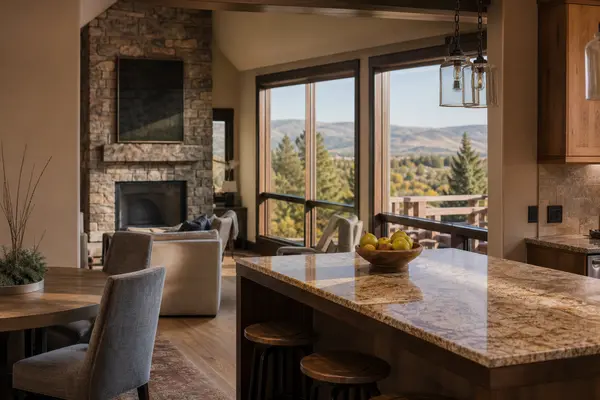
You walk inside and immediately encounter designer furniture, perfect lighting, an oversized kitchen island, beautiful flooring, upgraded cabinets, dramatic tile, and precisely two decorative lemons sitting on a cutting board.
Nobody actually lives this way.
Before falling in love with the model, ask one important question:
What comes standard?
The advertised base price may not include many of the features you are seeing.
Potential additional costs can include:
-
Lot premiums
-
Structural options
-
Upgraded flooring
-
Cabinets
-
Countertops
-
Lighting
-
Appliances
-
Finished basements
-
Additional bedrooms or bathrooms
-
Outdoor living areas
-
Landscaping
-
Window coverings
A home advertised from the mid-$500,000s can become considerably more expensive once selections are complete.
The objective is not to avoid upgrades. It is to know what you are buying and remain disciplined about the total budget.
Your Lot May Matter as Much as Your Floor Plan
Buyers often spend weeks studying floor plans and approximately seven minutes selecting the dirt underneath the house.
I would reverse some of that attention.
A kitchen can be remodeled.
Flooring can be replaced.
A basement can be finished.
You cannot realistically move your house because you later discover you dislike what sits behind it.
When evaluating an Aurora new-construction lot, consider:
-
Backyard orientation
-
Lot elevation
-
Street traffic
-
Future roads
-
Open-space proximity
-
Mountain or community views
-
Adjacent development
-
Drainage
-
Nearby commercial property
-
School sites
-
Parks
-
Utility infrastructure
-
Future phases of construction
Some lot premiums may be justified because the location creates meaningful long-term desirability.
Others may simply represent a feature the builder can charge extra for today.
Think about what a future resale buyer would value too.
Research What Will Be Built Around You
This is particularly important in rapidly developing portions of Aurora.
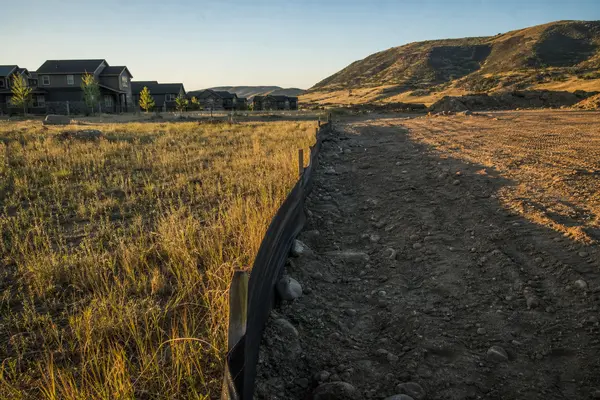
That beautiful open land behind your future backyard may indeed remain open.
Or it could eventually become another residential phase, apartments, commercial development, a school, or a road.
Do not make assumptions based solely on what you see during your tour.
Ask about:
-
Approved development plans
-
Future residential phases
-
Planned roads
-
Commercial areas
-
Schools
-
Parks
-
Public facilities
-
Nearby infrastructure projects
The City of Aurora provides planning and development information that buyers can use to research areas surrounding a potential purchase.
Future development is not necessarily negative. Grocery stores, parks, restaurants, schools, and infrastructure can make a community considerably more convenient.
The goal is simply to understand what you are buying into.
Understand Metro District Taxes
One of the biggest surprises for Colorado new-construction buyers can be Metropolitan Districts.
Many newer communities use Metro Districts to finance infrastructure and community improvements.
That can affect the property's annual tax bill.
This matters because buyers sometimes compare two homes based primarily on purchase price.
Imagine:
Home A: $600,000 with relatively low property taxes.
Home B: $585,000 with substantially higher taxes because of its taxing districts.
Home B may have the lower purchase price while still producing the higher monthly payment.
That is why I encourage buyers to compare the complete ownership cost, including:
-
Principal and interest
-
Property taxes
-
Homeowners insurance
-
HOA dues
-
Metro District taxes
-
Mortgage insurance when applicable
Price is important.
Monthly affordability is more important.
Builder Incentives Can Be Excellent, but Compare the Entire Deal
Builders frequently offer incentives to help sell inventory.
These may include:
-
Closing-cost credits
-
Temporary rate buydowns
-
Permanent mortgage-rate buydowns
-
Design-center credits
-
Upgrade allowances
-
Price reductions
-
Incentives tied to preferred lenders
Some builder financing offers can be exceptionally attractive.
But do not evaluate the financing based solely on the advertised mortgage rate.
Ask the preferred lender for a complete Loan Estimate and compare:
-
Interest rate
-
APR
-
Discount points
-
Origination charges
-
Lender fees
-
Estimated payment
-
Cash required at closing
Then compare that with an independent lender.
The builder's financing may still win.
Great. Take the better deal.
The objective is to know it is the better deal rather than assuming the word “incentive” automatically means bargain.
Choose Upgrades Strategically
The design center is another place where budgets can wander off into the wilderness.
I recommend separating upgrades into three categories.
Structural Improvements
These are difficult or expensive to add later.
Examples might include:
-
Additional garage space
-
Basement configurations
-
Extra bathrooms
-
Additional windows
-
Structural room extensions
-
Covered patios
If you truly want one of these features, purchasing it during construction can often make more sense than trying to recreate it later.
Resale-Friendly Improvements
These are features many future buyers are likely to appreciate.
Examples can include:
-
Quality flooring
-
Functional kitchen upgrades
-
Additional storage
-
Attractive countertops
-
Practical bathroom improvements
Personal Improvements
These are upgrades you love primarily because they fit your taste.
There is nothing wrong with personalizing your home.
Just recognize that spending $20,000 on a highly specific finish does not guarantee a future buyer will pay $20,000 more for the property.
Get the Home Inspected
I strongly recommend considering independent inspections on new construction.
A common reaction is:
“Why would I inspect a brand-new house?”
Because brand-new houses are still built by people.
Construction involves numerous contractors, subcontractors, materials, systems, and inspections.
Things can be missed.
Depending on the builder and construction schedule, buyers may consider:
-
Pre-drywall inspection
-
Final inspection before closing
-
Warranty inspection before an applicable builder warranty expires
An independent inspector works for you and provides another set of eyes on the property.
New does not mean perfect.
It means nobody has lived there yet.
Think About Resale Before You Buy
You might plan on living in your new Aurora home for 20 years.
Wonderful.
Still evaluate it as though you might eventually sell it.
Life changes.
Jobs move.
Families grow.
Families shrink.
Priorities change.
Consider future buyer appeal when choosing:
-
Lot
-
Floor plan
-
Bedroom count
-
Garage size
-
Upgrades
-
Community location
-
Tax structure
-
Outdoor space
The goal is not to design your home entirely around some imaginary future buyer.
It is to avoid spending heavily on decisions that could make the property harder to sell later.
Why My Construction Management Background Matters
New construction is one area where my background provides clients with an additional perspective.
I earned my Construction Management degree from Colorado State University before building my real estate career.
I've also worked with Denver-area buyers and sellers since 2008.
When we tour new construction together, I am not simply evaluating whether the kitchen is attractive.
I am thinking about:
-
Lot positioning
-
Drainage
-
Floor-plan functionality
-
Construction considerations
-
Upgrade value
-
Future maintenance
-
Neighborhood development
-
Resale potential
That does not replace the role of a licensed home inspector, engineer, contractor, attorney, or other specialist when one is needed.
It does help me ask better questions and help buyers look beyond the surface-level presentation.
New Construction Can Be Especially Helpful for Move-Up Buyers
New construction can also create opportunities for homeowners who need to sell their existing home before moving.
A longer construction timeline may provide additional time to:
-
Prepare the existing home
-
Determine market value
-
Build a selling strategy
-
Coordinate financing
-
Plan the move
If you already own a Denver-area property and want to understand its current value before purchasing new construction, you can start here:
Request a Home Value Evaluation
Understanding your available equity may significantly change what is possible for your next purchase.
Questions to Ask Your Aurora New-Construction REALTOR®
Before choosing representation, ask:
-
How long have you worked in Denver-area real estate?
-
Do you understand new-construction transactions?
-
Can you help compare different builders?
-
Will you help evaluate the lot?
-
Can you explain Metro District considerations?
-
How do you evaluate builder incentives?
-
Will you attend important appointments when appropriate?
-
Do you have experience evaluating resale potential?
-
What happens if problems arise during construction?
You are not hiring someone merely to walk through a model home with you.
You are hiring an advisor for a major financial decision.
You can find additional questions on my Real Estate FAQ page.
Read Reviews Before Choosing Your REALTOR®
Before hiring any REALTOR®, I encourage buyers to read reviews from past clients.
Look for recurring comments about:
-
Communication
-
Responsiveness
-
Negotiation
-
Knowledge
-
Patience
-
Problem solving
-
Client advocacy
You can read what previous clients have shared about working with me on my Zillow profile.
Reviews often tell you more about the actual client experience than a marketing slogan ever will.
Who Should You Choose for New Construction in Aurora?
There is no REALTOR® who is automatically the perfect choice for every new-construction buyer.
What you should look for is someone who combines:
-
Aurora and Denver metro knowledge
-
New-construction experience
-
Strong communication
-
Negotiation ability
-
Understanding of builder incentives
-
Knowledge of property taxes and Metro Districts
-
Long-term resale awareness
-
A willingness to slow down and explain the process
My goal is not simply to help you purchase a brand-new house.
It is to help you determine whether that particular house, on that particular lot, in that particular community, at that particular price is a good decision for you.
There is a pretty big difference between those two jobs.
Thinking About Buying New Construction in Aurora?
If you're considering a new home in Aurora, contact me before visiting the builder's sales office.
We can discuss your goals, budget, preferred communities, financing, commute, lot priorities, and long-term plans before you start looking at model homes.
Call or text me at 303-888-6101.
If you're relocating to Colorado, you can also download my Denver Metro Relocation Guide.
I've been helping Denver-area buyers and sellers since 2008, and my Construction Management background gives me an additional perspective when helping clients evaluate newly built homes.
Buying new construction should be exciting.
My job is to help make sure the excitement is paired with a solid strategy.
This article is for general educational purposes and is not legal, lending, construction, engineering, inspection, tax, or financial advice. Builder registration policies, contracts, incentives, pricing, warranties, community plans, HOA requirements, Metro District obligations, and financing programs vary and may change. Buyers should independently verify information and consult appropriate professionals regarding their specific purchase.
Categories
- All Blogs (167)
- Affordability (10)
- Appreciation (10)
- Arapahoe County (2)
- Aurora (15)
- Buying (97)
- Castle Pines (3)
- Castle Rock (23)
- Centennial (12)
- closing costs (5)
- Condo (11)
- Denver (33)
- Denver County (2)
- Divorce (2)
- Douglas County (20)
- Downsizing (10)
- Elbert County (2)
- Elizabeth (6)
- Fixer Upper (3)
- Highlands Ranch (22)
- Home Value (10)
- Insurance (3)
- Interest Rates (3)
- Investment (18)
- Lakewood (9)
- Littleton (22)
- Lone Tree (2)
- luxury (2)
- Market Update (3)
- Move-Up (9)
- New Construction (12)
- Parker (41)
- Realtor (13)
- Relocation (9)
- Rental Property (1)
- schools (1)
- Selling (114)
- Single Family Home (11)
- South Metro Denver (76)
- SRES (11)
- taxes (3)
- The Highlands (1)
Recent Posts




"My job is to find and attract mastery-based agents to the office, protect the culture, and make sure everyone is happy! "